

from Sceye
Sceye Completes Historic 12-Day, 6,400 Mile Stratospheric Flight, Advancing a New Layer of Infrastructure for Humanity
EQS-News: Sceye / Key word(s): Product Launch
Sceye Completes Historic 12-Day, 6,400 Mile Stratospheric Flight, Advancing a New Layer of Infrastructure for Humanity
13.04.2026 / 14:35 CET/CEST
The issuer is solely responsible for the content of this announcement.
Sceye's mission underscores progress in long-duration stratospheric operations ahead of pre-commercial telecom flight this Summer
MORIARTY, N.M., April 13, 2026 /PRNewswire/ -- Sceye, a U.S. aerospace and materials science company specializing in High-Altitude Platform Systems (HAPS) for telecommunications and real-time environmental monitoring, today announced the successful completion of its Endurance Program, during which Sceye's "SE2" HAPS traversed over 6,400 miles in the stratosphere from New Mexico to the coast of Brazil, marking a record flight time of over 12 days. Sceye successfully spent over 88 hours staying over an area of operation, including one full diurnal over New Mexico and three consecutive diurnals off the Brazilian coast before completing a planned and controlled flight termination.
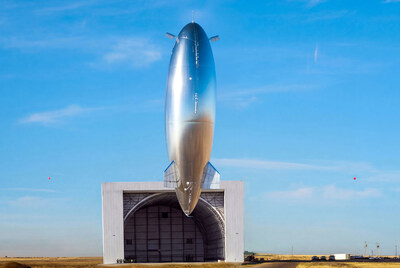
The Endurance Program built on Sceye's 2024 Control Dynamics Program, where Sceye's HAPS became the first to close the power loop in the stratosphere by staying powered through a full day-night cycle while maintaining position over an area of operation. The mission demonstrates the company's significant advances towards commercial deployment, delivering the configuration, operations protocols, and data required to move towards months-long flights.
"This is the defining step toward unlocking the stratosphere as a new layer of infrastructure," said Mikkel Vestergaard Frandsen, Founder and CEO of Sceye. "Endurance is what makes this possible. The ability to remain over an area for extended periods enables persistent connectivity and real-time monitoring where traditional networks and existing technologies fall short. Through the stratosphere, we can extend the reach of existing networks globally to billions of people that are unconnected and provide real-time actionable insights that significantly improve how we prepare for and respond to wildfires or other natural disasters."
During Sceye's SE2 flight, which launched March 25, 2026 at 8:26 AM MT from New Mexico, Sceye:
- Operated for over 12 days, lifting off from New Mexico and completing the mission in international waters off the coast of Brazil.
- Spent over 88 hours across several selected locations during the 6,400-mile flight maintaining position and altitude, achieving a station seeking radius as low as 1 km.
- Closed the power loop, maintaining power, position, and altitude during each day and night cycle. Sceye leverages solar power during daylight, which charges batteries that operate at night.
- Closed the pressure loop, maintaining vehicle pressure during each day and night cycle, validating the design of the company's first fully in-house manufactured hull.
This flight concluded Sceye's Endurance Program, which focused on aligning flight duration with commercial requirements and establishing a stable platform configuration for long-duration operations. Sceye now has all required data and configuration requirements to advance towards months and eventually years-long flights.
"With this mission, we're confidently moving forward to our pre-commercial test flights, the first of which is set to launch this summer," continued Frandsen. "This milestone is everything we've worked towards. This is a huge accomplishment not just for Sceye, but for the fast-growing stratospheric industry. Thank you to our investors, partners, customers, team, and the agencies that made this success possible."
Across the Endurance Program, Sceye advanced core systems, including power management, flight control, thermal management, and manufacturing, reducing risk and improving readiness for commercial operations. Recently, Sceye unveiled SceyeCELL, its first-of-its-kind "cell tower in the sky" antenna designed to bring high-speed connectivity at scale from the stratosphere.
Sceye is now preparing for its first pre-commercial test flight in Japan, with the goal to provide a successful backhaul connection into SoftBank Corp.'s core network and run demonstrations for expanded connectivity during emergency and disaster response scenarios.
About Sceye
Founded in 2014, Sceye (pronounced "sky") is an aerospace company dedicated to advancing stratospheric technology to connect people and protect the planet. Sceye leads the High-Altitude Platform Systems (HAPS) industry, focusing on universal connectivity, climate monitoring, natural resource management, and disaster prevention.
Media Contact: press@sceye.com
Photo - https://mma.prnewswire.com/media/2953516/Sceye_Historic_12_Day_6400_Mile_Stratospheric_Flight.jpg
Logo - https://mma.prnewswire.com/media/2484213/sceye_logo_suitcase_logo_full_colour_rgb_1000px_72ppi_ID_a12cb870d06f_Logo.jpg
 View original content:https://www.prnewswire.co.uk/news-releases/sceye-completes-historic-12-day-6-400-mile-stratospheric-flight-advancing-a-new-layer-of-infrastructure-for-humanity-302739779.html

13.04.2026 CET/CEST Dissemination of a Corporate News, transmitted by EQS News - a service of EQS Group.
The issuer is solely responsible for the content of this announcement.
The EQS Distribution Services include Regulatory Announcements, Financial/Corporate News and Press Releases.
View original content: EQS News
2307268 13.04.2026 CET/CEST